 There has been a great deal in the news over the last month or so about end-of-life care and the initiation and use of do-not-resuscitate orders. Two separate cases, both at Sunnybrook Health Sciences Centre in Toronto, have highlighted the challenges when the views of the health care team and those of the patient and family are in conflict at the end-of-life. On September 4th, the case of Douglas (Dude) DeGuerre and his daughter Joy Wawrzyniak was highlighted in an article in the Toronto Star. More recently, Mann Kee Li‘s case has been featured.
Li, a 46-year-old Toronto accountant and father of two young boys, wants doctors to use all medical measures possible to save him in the event of a life-threatening emergency.He made those intentions clear to his doctors at Sunnybrook Health Sciences Centre when he entered the hospital in August. He wrote it in a power of attorney document and confirmed it in a videotape statement, his lawyers say. While his doctor initially agreed to respect those wishes, physicians unilaterally reversed the decision a week ago without consultation and imposed a “do not resuscitate” order, his family alleges.
These two cases have a couple of common characteristics. First, the journalists have stated that the values and wishes of the patient/family and the health care team have been in conflict. Second, the families of the patients have stated that they were not included in decision-making regarding end-of-life care and more specifically, the lack of aggressive life-saving care that would be provided at the end-of-life.
Interestingly, a while after these two stories appeared in the news, I saw this headline on CBC news: DNR Orders Must be Discussed. Frankly, I’m not sure when the decision was made to stop talking to patients about end of life issues or DNR orders. Each of the patients’ cases in the stories above emphasize that decisions regarding DNR orders were not discussed with the patients or families. The fact that families feel that they haven’t felt that they’ve been part of the decision-making processes regarding end-of-life care and wishes, means that something is definitely wrong with how the health care team is functioning, at a very basic level. What these patients’ and families’ stories are really about are communication and values. One thing I couldn’t help thinking as I read these two patients’ stories was: Weren’t the nurses talking about these issues with the patients and families? Isn’t it inevitable that they would have been asked to? If so, what happened?
There are significantly troubling issues that arise out of these cases — too many to address in one blog entry. There are entire courses on the ethical issues surrounding end-of-life care. To do these issues justice, one requires more than a blog entry, even a very long one. So let’s just consider the issue of communication and the role of the nurse in these types of cases. While nurses may not be able to write the actual DNR order in most jurisdictions, they are, many times, the ones that patients and families turn to, in order to talk about what a DNR order really means. Nurses are also the ones that patients and families turn to when they fear that their values and wishes will not be either honoured or respected. Often, the bedside nurse is seen as a much less intimidating confidante than the physician. In my own experience working in cardiac surgery, there were many times I watched as caring and communicative surgeons obtained informed consent from calm, agreeable and seemingly very willing patients for surgical procedures, only to have those same patients (and families) voice doubt, fear and confusion to me moments after the surgeons left. By virtue of a number of factors (clinical distance and proximity, time spent at the bedside, intimacy of care provided, accessibility, knowledge and skills), it remains that nurses are often still the ones who patients and families seek out, in times of intense personal crisis.
In turn, nurses have a unique responsibility to patients and families, in situations of value conflict or crisis. When patients or families feel that they do not ‘have a voice’, nurses need to advocate for them. This doesn’t mean that a nurse must ‘take a side’ or necessarily agree with the patient, the family or the physician. This obligation is one that exists regardless of the context, and is essentially a professional and ethical responsibility.
In one Canadian document regarding end of life care, the Canadian Nurses Association Position Statement on Providing Nursing Care At The End Of Life (2008), it’s easy to see that the nurse has a number of responsibilities when it comes to providing end-of-life care, but a very important one is collaboration between all involved to foster an approach that is holistic, respectful of diverse values and based on consistent and meaningful communication. Here’s an excerpt:
Quality end-of life care is “best provided through the collaborative practice of an interdisciplinary team to meet the physical, emotional, social and spiritual needs of the person and their family.” Nurses, as members of the interprofessional team, collaborate with the person, the person’s family and all those involved in providing care (such as physicians, other health-care professionals and volunteers) to support a holistic approach; incorporate the person’s priorities, values and choices in all aspects of care; and address any specific concerns that may arise….
…Nurses are uniquely situated to develop therapeutic relationships with dying people and their families. Nurses who provide care at the end of life are witness to, and part of, a complex process that is physically, psychologically, emotionally and spiritually intimate and profound for most individuals, their families and their health-care providers.
It’s far too easy to ‘doctor-bash’ and claim that the physicians made decisions without including the values and wishes of the families and patients involved and that all the blame should be put on the doctors involved. However, everyone on the interdisciplinary team shares the responsibilities for ensuring holistic and collaborative care along with effective and therapeutic communication. When values conflict, everyone on the team knows – and action must be taken to encourage communication by everyone involved. I’m certainly not saying that there is any kind of easy answer — “Simply speak up for the patient and everything will be fixed!” — but I do think that the obligation to advocate for the patient and to ensure that communication is ongoing within the health care team is a very weighty one, and one that nurses must take on.
 Here’s just a very quick one about the difficulties of nursing under extreme conditions.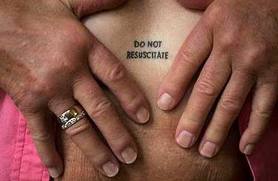

 The Nursing Ethics Blog